Friday, March 06, 2009


Wednesday, March 04, 2009
From John Calvin on James
Therefore, confess your sins to one another and pray for one another, that you may be healed. The prayer of a righteous person has great power as it is working. -James 5:16
Mark's question on accountability in ministry was a good good one: If I don't give full disclosure am I even receiving the benefits of the relationship? Calvin makes a good case to connect brotherly reconciliation to confession/accountability. I am beginning to see how those two should not be made distinct. The reason why we gather is to mutually encourage and offer the support to one another that's needed. Am I an individual who sucks up help like a leech or am I a member in the body supporting and gaining support from all the other parts as they work together? So Calvin is right to say that James' goal is to make us aware that the help we need in combating sin must come from our brothers who will be ready to bring us help if we confess. We who are called Christian no longer live for ourselves. Which we can easily say, but implied in that bold statement is that we live to God in Christ instead, and God in Christ has chosen to show himself through the local congregation.
"[James] reminds them how useful it is to discover our sins to our brethren even that we may obtain the pardon of them by their intercession. This passage I know is explained by many as referring to the reconciling of offenses for they who wish to return to favor must necessarily know first their own faults and confess them. For hence it comes that hatreds take root yea and increase and become irreconcilable because every one pertinaciously defends his own cause. Many therefore think that James points out here the way of brotherly reconciliation that is by mutual acknowledgment of sins. But as it has been said his object was different for he connects mutual prayer with mutual confession by which he intimates that confession avails for this end that we may be helped as to God by the prayers of our brethren for they who know our necessities are stimulated to pray that they may assist us but they to whom our diseases are unknown are more tardy to bring us help."Commentaries on the catholic epistles, tr. and ed. by J. Owen By Jean [comms. on the Bible] Calvin
Mark's question on accountability in ministry was a good good one: If I don't give full disclosure am I even receiving the benefits of the relationship? Calvin makes a good case to connect brotherly reconciliation to confession/accountability. I am beginning to see how those two should not be made distinct. The reason why we gather is to mutually encourage and offer the support to one another that's needed. Am I an individual who sucks up help like a leech or am I a member in the body supporting and gaining support from all the other parts as they work together? So Calvin is right to say that James' goal is to make us aware that the help we need in combating sin must come from our brothers who will be ready to bring us help if we confess. We who are called Christian no longer live for ourselves. Which we can easily say, but implied in that bold statement is that we live to God in Christ instead, and God in Christ has chosen to show himself through the local congregation.
Tuesday, March 03, 2009
Shattering Marriage Ideals II
Powerful Quote:
Over the destiny of woman and of man lies the dark shadow of a word of God’s wrath, a burden from God, which they must carry. The woman must bear her children in pain, and in providing for his family the man must reap many thorns and thistles, and labor in the sweat of his brow. This burden should cause both man and wife to call on God, and should remind them of their eternal destiny in his kingdom. Earthly society is only the beginning of the heavenly society, the earthly home an image of the heavenly home, the earthly family a symbol of the fatherhood of God.
-DietrichBonhoeffer, Letters and Papers from Prison, 31
full quote here.
from Pastor Paul Veal's blog.
and Pastor John Piper's new book.
Over the destiny of woman and of man lies the dark shadow of a word of God’s wrath, a burden from God, which they must carry. The woman must bear her children in pain, and in providing for his family the man must reap many thorns and thistles, and labor in the sweat of his brow. This burden should cause both man and wife to call on God, and should remind them of their eternal destiny in his kingdom. Earthly society is only the beginning of the heavenly society, the earthly home an image of the heavenly home, the earthly family a symbol of the fatherhood of God.
-DietrichBonhoeffer, Letters and Papers from Prison, 31
full quote here.
from Pastor Paul Veal's blog.
and Pastor John Piper's new book.
Friday, February 27, 2009
Shattering Marriage Ideals

The introduction to John Piper's This Momentary Marriage: a Parable of Permanence has shattered my understanding of marriage like nothing else ever has. PDF here.
Auden
Earth, receive an honoured guest:
William Yeats is laid to rest.
Let the Irish vessel lie
Emptied of its poetry.
In the nightmare of the dark
All the dogs of Europe bark,
And the living nations wait,
Each sequestered in its hate;
Intellectual disgrace
Stares from every human face,
And the seas of pity lie
Locked and frozen in each eye.
Follow, poet, follow right
To the bottom of the night,
With your unconstraining voice
Still persuade us to rejoice;
With the farming of a verse
Make a vineyard of the curse,
Sing of human unsuccess
In a rapture of distress;
In the deserts of the heart
Let the healing fountain start,
In the prison of his days
Teach the free man how to praise.
—W.H. Auden, "In Memory of W.B. Yeats", February 1939
In 1939 as the dogs of Europe bark in hate and as grace and pity lie locked and frozen, Auden prays that the words of Yeats, his friend, might bloom and persuade and sing and heal. Words can be powerful.
Father, God, we want Your words to teach our hearts in the same way. You are good and your words are good. May your words bloom in us and give us life. May they persuade us to follow your Son. May they sing over us and teach us to rejoice. May they be words that heal.
Really Seeing
That day when evening came, he said to his disciples, “Let us go over to the other side.” Leaving the crowd behind, they took him along, just as he was, in the boat. There were also other boats with him. A furious squall came up, and the waves broke over the boat, so that it was nearly swamped. Jesus was in the stern, sleeping on a cushion. The disciples woke him and said to him, “Teacher, don’t you care if we drown?” He got up, rebuked the wind and said to the waves, “Quiet! Be still!” Then the wind died down and it was completely calm. He said to his disciples, “Why are you so afraid? Do you still have no faith?” They were terrified and asked each other, “Who is this? Even the wind and the waves obey him!” Mark 4:35-41Outside of the words "furious squall", there are other reasons to love this passage.
Notice that everything that Jesus does here we can physically see:
He speaks, “Let us go over to the other side.”
He leaves the crowd
He gets in the boat
He sleeps
He wakes up
He gets up
He speaks, “Quiet! Be still!”
He speaks, “Why are you so afraid? Do you still have no faith?”
Nothing is done here that can’t explained naturally. No special effects needed. But somewhere along the line the Disciples are changed. They were terrified and asked each other, “Who is this? Even the wind and the waves obey him!” Their eyes are opened and they begin to really see Jesus.
Before this "incident" Jesus tells two parables, prefaced by a statement. The first parable is the parable of the seed that grows, night or day, waking or sleeping, and we know not how. Understanding comes from God, and we know not how. Seeing comes from God, and we know not how, but still it comes. Check out Unshackled if you don't believe me. Lincoln and I listen to Unshackled all the time. We hear the tragic story of lives enslaved by drugs, alcohol, abuse, or otherwise, and about half way through we ask the question, "How is God going to get to this person this time?" And God always does. Eyes are opened and yet we know not how.
The second parable is of the mustard seed. Even and faith that's small is a faith that grows.
Jesus prefaces both of these parables with this statement: "Consider carefully what you hear." Mark 4:25.
When our eyes are opened and we being to consider what Jesus says carefully, even the "small" faith can accomplish great things. This is why the Disciples are rebuked by Jesus in the boat. He had just said, "Let us go over to the other side.” Mark 4:35. A "small" faith will trust even a "small" statement by the One we have faith in.
And when we do, our eyes begin to really see.
Sunday, February 22, 2009
Bible Reading Plans
Okay, I need to start a daily Bible reading plan. I have been doing some online exploring and have come up with these choices (so far). What plan do you use?
Various Bible-in-a-Year Plans Here
Topical
Straight Through (Genesis-Revelation)
Discipleship Journal's Through the New Testament
Discipleship Journal's Through the Bible Book-at-a-Time
Discipleship Journal's Through the Bible (Four Parts per Day)
Bethlehem Baptist reading plans
More than once through the Bible-in-a-Year Plans
Rober Murray McCheyne Reading Plan
McCheyne Readings Updated Daily to make your home page.
Through the Bible in more than One Year
Every Word in the Bible in Three Years
Bible in Three Years
Various Other Year Plans
Losely "Chronologically" Arranged
New Testament, Psalms & Proverbs in one Year
Eastern Orthodox Psalms Worship Plan
Various Other Plans
BiblePlan.org has quite a few plans.
Zondervan's website has bible reading plans on differing topics from two weeks to to three years.
ESV Bible's website has bible reading plans including the Book of Common Prayer Daily Office
121 Day of Bible Characters
61 Day Bible Survey
30 Days with Jesus (Gospels Reading Plan)
Taizé daily readings
Historical Classical Realding Plans
Ambrose
Augustine
Others
Various Bible-in-a-Year Plans Here
Topical
Straight Through (Genesis-Revelation)
Discipleship Journal's Through the New Testament
Discipleship Journal's Through the Bible Book-at-a-Time
Discipleship Journal's Through the Bible (Four Parts per Day)
Bethlehem Baptist reading plans
More than once through the Bible-in-a-Year Plans
Rober Murray McCheyne Reading Plan
McCheyne Readings Updated Daily to make your home page.
Through the Bible in more than One Year
Every Word in the Bible in Three Years
Bible in Three Years
Various Other Year Plans
Losely "Chronologically" Arranged
New Testament, Psalms & Proverbs in one Year
Eastern Orthodox Psalms Worship Plan
Various Other Plans
BiblePlan.org has quite a few plans.
Zondervan's website has bible reading plans on differing topics from two weeks to to three years.
ESV Bible's website has bible reading plans including the Book of Common Prayer Daily Office
121 Day of Bible Characters
61 Day Bible Survey
30 Days with Jesus (Gospels Reading Plan)
Taizé daily readings
Historical Classical Realding Plans
Ambrose
Augustine
Others
Tuesday, February 17, 2009
Mormons and Gideons
Lincoln had his first encounter with Mormonism last weekend. The family minus myself got enjoy President's Day in Minneapolis, seeing relatives, and the Mall of America, and swimming in a hotel pool. In the room, however, next to the Gideon's Bible in the hotel room was a Book of Mormon.
Lincoln also had his first memorable encounter with a Gideon last weekend. The Gideons speaker in church on Sunday talked about a gal who came to Christ after "stealing" a Bible from a hotel room. Put the two together. Shake them up in a nine-year-old brain and Lincoln holds up the Book of Mormon and asks his mom, "Is this book one we can steal?"
What do do? Kristl decided on just giving the facts of the case to Lincoln and letting him figure things out on his own. She casually explained that that book was a story about Jesus that a man made up about Jesus going to speak to the Indians in America. Confused a bit, Lincoln began flipping through the pages of both the blue Book of Mormon and the red Gideon's Bible. Finally flipping to the last page of the Book of Mormon showing it to Mom and saying, "See, right here it says 'the end'. This book is a fairy tale."
And that was the end of that.
Huge list of Mormon-Christian resources, here.
Great list of curiosities in the Mormon texts and these "questions answered" here.
Finally, one last curiosity from Arkansas.
Lincoln also had his first memorable encounter with a Gideon last weekend. The Gideons speaker in church on Sunday talked about a gal who came to Christ after "stealing" a Bible from a hotel room. Put the two together. Shake them up in a nine-year-old brain and Lincoln holds up the Book of Mormon and asks his mom, "Is this book one we can steal?"
What do do? Kristl decided on just giving the facts of the case to Lincoln and letting him figure things out on his own. She casually explained that that book was a story about Jesus that a man made up about Jesus going to speak to the Indians in America. Confused a bit, Lincoln began flipping through the pages of both the blue Book of Mormon and the red Gideon's Bible. Finally flipping to the last page of the Book of Mormon showing it to Mom and saying, "See, right here it says 'the end'. This book is a fairy tale."
And that was the end of that.
Huge list of Mormon-Christian resources, here.
Great list of curiosities in the Mormon texts and these "questions answered" here.
Finally, one last curiosity from Arkansas.
Saturday, February 14, 2009
To Love Love
He has showed you, O man, what is good.And what does the Lord require? The Hebrew verb translated as "love" here is 'ahav and the Hebrew noun translated here as "mercy" is hesed. The range of meanings of these two words is great, just like our English word love. In context either could mean "love." So, it follows, that a legitimate translation of the verse, could be... And what does the LORD require of you? To act justly and to love love.
And what does the LORD require of you?
To act justly and to love mercy
and to walk humbly with your God. -Micah 6:8
Happy Valentine's Day
Friday, February 13, 2009

Thursday, February 12, 2009


Link of the Moment
Ryan Stander's [Potok-Grenz-Kerouac-Augustine-Norris fan] link to and text of a document on Baptist Identity, here.
Two mistaken paths imperil this precious freedom in contemporary Baptist life. Down one path go those who would shackle God’s freedom to a narrow biblical interpretation and a coercive hierarchy of authority. Down the other path walk those who would sever freedom from our membership in the body of Christ and the community’s legitimate authority, confusing the gift of God with notions of autonomy or libertarian theories. We contend that these two conceptions of freedom, while seemingly different, both define freedom as a property of human nature apart from the freedom of God in Jesus Christ and the Holy Spirit. We reject both of them as false.Can this be read as a comment on church membership?
Wednesday, February 11, 2009
The Apostolic Church Planter
Although I did not know him, I have been thinking about Jorge Osorio’s mission plan for organizing churches with Hisapanics for Christ. Organize a group of disciples quickly and then move on. This intriguing idea/method/call sounds appropriate and was effective. But was it biblical?
I think maybe it was.
What if a church planter is not so much the "pastor" of a church as much as he is an organizer of churches, playing the role of apostle, with (almost) sole authority to organize a group of Christians in to a classical-biblical congregation [preach the gospel, administer the sacraments, practice discipline]. Where and when a church is finally "organized" an apostle moves on, leaving a pastor/elder team to lead the church and a congregational government to act in large, or "apostolic" decisions.
Isn't this what Paul, Barnabas, and the other (unmentioned?) disciples, who seem to have shortly left Jerusalem presumably to organize churches did? Moving from city to city evangelizing and gathering and then moving on. Apocryphal or not, there are no histories of specific churches where Thomas, Bartholomew or James the Less ruled from outside Jerusalem. If anything all of the apostles seemed to operate as itinerant organizers, starting churches as they went, leaving pastor-shepherds behind in their good gospel-wake.
A seminal idea at least, but I think it could be a missing piece of strategy that prevents church planting efforts from becoming church planting movements. Not being a church planter I could be way off the mark, but I would like to explore this idea further.
I think maybe it was.
What if a church planter is not so much the "pastor" of a church as much as he is an organizer of churches, playing the role of apostle, with (almost) sole authority to organize a group of Christians in to a classical-biblical congregation [preach the gospel, administer the sacraments, practice discipline]. Where and when a church is finally "organized" an apostle moves on, leaving a pastor/elder team to lead the church and a congregational government to act in large, or "apostolic" decisions.
Isn't this what Paul, Barnabas, and the other (unmentioned?) disciples, who seem to have shortly left Jerusalem presumably to organize churches did? Moving from city to city evangelizing and gathering and then moving on. Apocryphal or not, there are no histories of specific churches where Thomas, Bartholomew or James the Less ruled from outside Jerusalem. If anything all of the apostles seemed to operate as itinerant organizers, starting churches as they went, leaving pastor-shepherds behind in their good gospel-wake.
A seminal idea at least, but I think it could be a missing piece of strategy that prevents church planting efforts from becoming church planting movements. Not being a church planter I could be way off the mark, but I would like to explore this idea further.
Tuesday, February 10, 2009
Church Membership and the Declaration of Independence
Questions about church membership confronts head-on and attempts answer a couple of important questions, one of which the Declaration of Independence also attempts to answer:
Is a human being fundamentally defined by a set of "inalienable rights" or by an endowing by their Creator?
Fortunately for America, the Declaration of Independence scrambles the two.
If you are one that leans towards rights, then you will also place less importance on church membership. Persons who have received rights that cannot be taken away are also persons who can freely choose to join (and leave) whatever church they would like, or, more correctly, whatever church will take them. Membership and participation are reduced to and defined by the assent of the member to church practice and doctrine and discipline.
If, on the other hand, you are one that leans towards endowing then you will have a higher view of the church and of membership. A person who understands that any "right" given have been granted by their Creator must ultimately give credit to and be obedient to that Creator. That person will submit to church practice, and doctrine, and when necessary, church discipline as the established Head of the church. All members of a congregation submit to one another as all submit to Christ.
In an increasingly voyeuristic-pluralistic world, the testimony that Church Membership by gifted endowment of the creator brings with it a humble recognition that the "we" of any church have not been gathered by assent but called by decree.
Is a human being fundamentally defined by a set of "inalienable rights" or by an endowing by their Creator?
Fortunately for America, the Declaration of Independence scrambles the two.
If you are one that leans towards rights, then you will also place less importance on church membership. Persons who have received rights that cannot be taken away are also persons who can freely choose to join (and leave) whatever church they would like, or, more correctly, whatever church will take them. Membership and participation are reduced to and defined by the assent of the member to church practice and doctrine and discipline.
If, on the other hand, you are one that leans towards endowing then you will have a higher view of the church and of membership. A person who understands that any "right" given have been granted by their Creator must ultimately give credit to and be obedient to that Creator. That person will submit to church practice, and doctrine, and when necessary, church discipline as the established Head of the church. All members of a congregation submit to one another as all submit to Christ.
In an increasingly voyeuristic-pluralistic world, the testimony that Church Membership by gifted endowment of the creator brings with it a humble recognition that the "we" of any church have not been gathered by assent but called by decree.
Friday, February 06, 2009
Good Augustinian Coffee

For when the one supreme God of gods is thought of, even by those who believe that there are other gods, and who call them by that name, and worship them as gods, their thought takes the form of an endeavour to reach the conception of a nature, than which nothing more excellent or more exalted exists. And since men are moved by different kinds of pleasures, partly by those which pertain to the bodily senses, partly by those which pertain to the intellect and soul, those of them who are in bondage to sense think that either the heavens, or what appears to be most brilliant in the heavens, or the universe itself, is God of gods: or if they try to get beyond the universe, they picture to themselves something of dazzling brightness, and think of it vaguely as infinite, or of the most beautiful form conceivable; or they represent it in the form of the human body, if they think that superior to all others. Or if they think that there is no one God supreme above the rest, but that there are many or even innumerable gods of equal rank, still these too they conceive as possessed of shape and form, according to what each man thinks the pattern of excellence. Those, on the other hand, who endeavour by an effort of the intelligence to reach a conception of God, place Him above all visible and bodily natures, and even above all intelligent and spiritual natures that are subject to change. All, however, strive emulously to exalt the excellence of God: nor could any one be found to believe that any being to whom there exists a superior is God. And so all concur in believing that God is that which excels in dignity all other objects. -Augustine, On Christian Doctrine, Book One, Chapter 7
I like my coffee strong, you might not. Which is to say that we are each motivated by different kinds of pleasures. Everybody makes their coffee up the way that they like it. One lump or two? Without Christ we can do no more than think of God in terms of the pleasures our body desires. “God” to the sinful self is no more than a good (or rather the best possible) cup of coffee. He is no more that what appears to be the best most beautiful thing. In our sinful state will always naturally exchange the glory of the immortal God for physical things resembling perishable created things. Romans 1:23 Without Christ we can only make judgment based on our own fallen pattern of excellence. But those of faith are different. The faithful, however, venture to place Christ above and outside all that is visible and physical, above all intelligent and spiritual thought which are subject to change. The Only Begotten receives authority over all things by His death. Colossians 1:16-17 Through his blood our fallen minds are renewed Colossians 1:19-22a and we begin to see Christ and God and all of life rightly. Life becomes more than just a quest for the best possible cup of coffee, but a journey in and under the One who teaches us to enjoy and savor that cup only as we enjoy and savor Him.
Thursday, February 05, 2009
Congregational Government
Twice in Matthew Jesus says these words:
My two cents:
In both instances Jesus references "binding and loosing" in the context of the church [ekklesia], the only difference between the two is that one is addressed directly to Peter, "you" singular and the other, presumably is addressed to the assembled congregation, "you" plural. In other words, in one case Peter the Apostle is given heavenly authority to "bind and loose" things on earth, and in the other case that same authority is given to the church body, to the congregation.
Notice Paul the Apostle's words to the Corinthians:
Congregational government seems to take the place of apostolic authority. In the New Testament the apostles and Paul, and perhaps James rule with authority over the church, that authority is also vested in the gathered body of the church as well. Normal practice for New Testament churches, as taught by Paul at least, seems to be that what was apostolic authority now rests in the gathered whole as we assemble in Christ's name.
Whatever you bind on earth shall be bound in heaven, and whatever you loose on earth shall be loosed in heaven. Matthew 16:19; 18:18Interesting applications by J. Howard Yoder, here.
My two cents:
In both instances Jesus references "binding and loosing" in the context of the church [ekklesia], the only difference between the two is that one is addressed directly to Peter, "you" singular and the other, presumably is addressed to the assembled congregation, "you" plural. In other words, in one case Peter the Apostle is given heavenly authority to "bind and loose" things on earth, and in the other case that same authority is given to the church body, to the congregation.
Notice Paul the Apostle's words to the Corinthians:
Even though I am not physically present, I am with you in spirit. And I have already passed judgment on the one who did this, just as if I were present. When you are assembled in the name of our Lord Jesus and I am with you in spirit, and the power of our Lord Jesus is present... 1 Corinthians 5:3-4Another passage on church discipline. Paul seems to be saying that although I am not, physically present, the assembled church has the same authority to make judgments that I would have if I were present. Notice also that the phrase, "our Lord Jesus is present" may allude to Christ's words in Matthew 18:20, For where two or three come together in my name, there am I with them.
Congregational government seems to take the place of apostolic authority. In the New Testament the apostles and Paul, and perhaps James rule with authority over the church, that authority is also vested in the gathered body of the church as well. Normal practice for New Testament churches, as taught by Paul at least, seems to be that what was apostolic authority now rests in the gathered whole as we assemble in Christ's name.
Thursday, December 25, 2008
We went with Blue on the Christmas Tree This Year
I still claim there are two ways to decorate a Christmas Tree. 1) The family heirloom tree, decorated with treasured ornaments from Christmases past. 2) The theme tree, decorated with a premise or color scheme. Our family generally does the latter. Themes from years past include: white lights with gold ornaments; red wooden snowflakes; a purple light tree; oversized red balls; silver and white. This year we decided on blue and white lights with blue balls and silver snowflakes picked up on K-Martclearance last year. Dad did the lights, Lincoln put the star on top and helped place balls on the tree, Liberty helped place the balls (she could reach) in the middle of the living room, and Mom correctly adjusted the ornaments.
Blue is not your traditional Christmas color, the tradition limited to red and green and maybe gold, (Gold and it’s cousin frankincense are technically Epiphany colors) leaving blue out in the cold. I did run across this in William Sandys’ 1833 book Christmas carols, Ancient and Modern. It’s the only mention of anything blue in this book of 100 carols:
The fire with well-dried logs supplied,
Went roaring up the chimney wide;
The huge hall-table's oaken face,
Scrubbed till it shone, the day to grace,
Bore then upon its massive board
No mark to part the squire and lord.
Then was brought in the lusty brawn,
By old blue-coated serving-man;
Then the grim boar's-head frowned on high,
Crested with hays and rosemary.
This carol celebrates the Boar’s Head Feast. Little did you know that this feast is probably the oldest continuing festival of the Christmas season. I knew little of the feast as well until I pulled it up on Wikipedia and found that the festival dated back to the 1300’s. Lords and servants alike, gather together to feast and tell the story of the Nativity. The height of the evening being when the dining guests watched the boar’s head marched through the hall. Oh to be present in the fire-lit hall on Christmas Eve when the blue-coated serving-man triumphantly brings in the roasted boar and everyone cheers! What a celebration!
Although we may have a Blue Christmas without you, Christmas should still be a feast. At Christmas we gather one and all to celebrate Life and Light. We experience first hand the goodness of God. His Son is given, born in a manger that we might:
Taste and see that the LORD is good! Blessed are they who takes refuge in Him.
Psalm 34:8
The Christ-Child enjoyed every meal and song and color of life, because the Son of God took refuge in His Father in Heaven in all things. We pray that God shows you His goodness this Christmas as you take refuge in Him.
May your taste and see the goodness of God the Father.
May you be blessed by every carol and meal, may you enjoy the fellowship of family and friends, and may you learn to love all the colors of Christmas.
We take refuge in the Lord, we relish in the Gift he has given, and we are thankful for all that God has in store for you and for us now and in the year to come.
To you and yours at your feast,
Caput apri defero,Reddens laudes Domino!
Benjamin & Kristl, Lincoln, Liberty

Blue is not your traditional Christmas color, the tradition limited to red and green and maybe gold, (Gold and it’s cousin frankincense are technically Epiphany colors) leaving blue out in the cold. I did run across this in William Sandys’ 1833 book Christmas carols, Ancient and Modern. It’s the only mention of anything blue in this book of 100 carols:
The fire with well-dried logs supplied,
Went roaring up the chimney wide;
The huge hall-table's oaken face,
Scrubbed till it shone, the day to grace,
Bore then upon its massive board
No mark to part the squire and lord.
Then was brought in the lusty brawn,
By old blue-coated serving-man;
Then the grim boar's-head frowned on high,
Crested with hays and rosemary.
This carol celebrates the Boar’s Head Feast. Little did you know that this feast is probably the oldest continuing festival of the Christmas season. I knew little of the feast as well until I pulled it up on Wikipedia and found that the festival dated back to the 1300’s. Lords and servants alike, gather together to feast and tell the story of the Nativity. The height of the evening being when the dining guests watched the boar’s head marched through the hall. Oh to be present in the fire-lit hall on Christmas Eve when the blue-coated serving-man triumphantly brings in the roasted boar and everyone cheers! What a celebration!
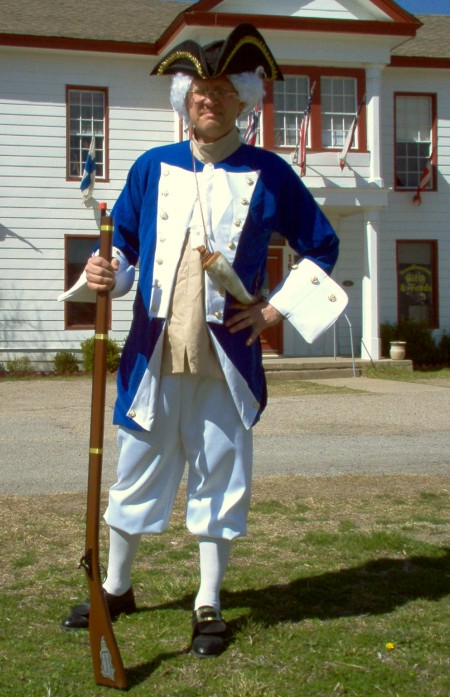
Although we may have a Blue Christmas without you, Christmas should still be a feast. At Christmas we gather one and all to celebrate Life and Light. We experience first hand the goodness of God. His Son is given, born in a manger that we might:
Taste and see that the LORD is good! Blessed are they who takes refuge in Him.
Psalm 34:8
The Christ-Child enjoyed every meal and song and color of life, because the Son of God took refuge in His Father in Heaven in all things. We pray that God shows you His goodness this Christmas as you take refuge in Him.
May your taste and see the goodness of God the Father.
May you be blessed by every carol and meal, may you enjoy the fellowship of family and friends, and may you learn to love all the colors of Christmas.
We take refuge in the Lord, we relish in the Gift he has given, and we are thankful for all that God has in store for you and for us now and in the year to come.
To you and yours at your feast,
Caput apri defero,Reddens laudes Domino!
Benjamin & Kristl, Lincoln, Liberty
Friday, December 05, 2008
Light of the World
There are lights at Christmas for two reasons. The first is that Jesus speaks of himself as the "light of the world" because only he reveals/reflects God the Father.
There are lights at Christmas for a second reason. It is night. Christmas comes at the darkest season of the year (apologies to those of you living in Australia). Jesus is not only the light of the world but a light that shines in darkness. It is a wonder and mystery and to his eternal glory that the Father chooses to give us light at all.
John has this great comment at his recounting of Jesus' betrayal. Right after Judas leaves the last supper John says, "and it was night." The deeds done dirt cheap are done in the darkness, but the Christ then responds with his own commentary on the betrayal:
There are lights at Christmas for a second reason. It is night. Christmas comes at the darkest season of the year (apologies to those of you living in Australia). Jesus is not only the light of the world but a light that shines in darkness. It is a wonder and mystery and to his eternal glory that the Father chooses to give us light at all.
John has this great comment at his recounting of Jesus' betrayal. Right after Judas leaves the last supper John says, "and it was night." The deeds done dirt cheap are done in the darkness, but the Christ then responds with his own commentary on the betrayal:

When he had gone out, Jesus said, "Now is the Son of Man glorified, and God is glorified in him. If God is glorified in him, God will also glorify him in himself, and glorify him at once.The glory of God shines in and through the Only Begotten. He is Light. The light of the Father. The light that penetrates our darkness.
Wednesday, November 19, 2008
Everything Biblical Hebrew
Here is the best introduction to Hebrew Script that I have found: Omniglot
(more on Hebrew script than you wanted to know)
Best Learning Site: Hebrew for Christians
(a little too heavy on all the messianic Judaism stuff, but each of the twelve or so sections under Grammar is divided up into individual lessons, like 9 lessons just on nouns alone.)
A little clunky but... you can find Thirty One Hebrew Lessons here:
Biblia Hebraica
Here is Chapter-by-Chapter mp3 readings of the Hebrew Bible:
Mechon Mamre and here: Academy of Ancient Languages
Which you can listen to and follow along with these Hebrew-English rendition of the Hebrew Bible:
Mechon Mamre
Sacred-Texts
Tyler Williams, the OT / Hebrew professor at Taylor University College, Edmonton, Alberta. (my alma mater) website: Biblical-Studies.Ca Biblical-Studies Blog
Lists and links to Teaching Tools and Links can be found Here:
Hebrew Language Teachers' Toolbox and here Bible-Researcher and here is the insane list of Links for everything Hebrew PaleoJudaica
also check out the list of Hebrew Grammars etc. on Google Books
Elements of Hebrew Syntax by an Inductive Method
Gesenius' Hebrew Grammar
A Hebrew and English Lexicon of the Old Testament
The Analytical Hebrew and Chaldee Lexicon
A Lexicon, Hebrew, Chaldee, and English
A Grammar of the Hebrew Language
Old languages and old books are better!
(more on Hebrew script than you wanted to know)
Best Learning Site: Hebrew for Christians
(a little too heavy on all the messianic Judaism stuff, but each of the twelve or so sections under Grammar is divided up into individual lessons, like 9 lessons just on nouns alone.)
A little clunky but... you can find Thirty One Hebrew Lessons here:
Biblia Hebraica
Here is Chapter-by-Chapter mp3 readings of the Hebrew Bible:
Mechon Mamre and here: Academy of Ancient Languages
Which you can listen to and follow along with these Hebrew-English rendition of the Hebrew Bible:
Mechon Mamre
Sacred-Texts
Tyler Williams, the OT / Hebrew professor at Taylor University College, Edmonton, Alberta. (my alma mater) website: Biblical-Studies.Ca Biblical-Studies Blog
Lists and links to Teaching Tools and Links can be found Here:
Hebrew Language Teachers' Toolbox and here Bible-Researcher and here is the insane list of Links for everything Hebrew PaleoJudaica
also check out the list of Hebrew Grammars etc. on Google Books
Elements of Hebrew Syntax by an Inductive Method
Gesenius' Hebrew Grammar
A Hebrew and English Lexicon of the Old Testament
The Analytical Hebrew and Chaldee Lexicon
A Lexicon, Hebrew, Chaldee, and English
A Grammar of the Hebrew Language
Old languages and old books are better!
Sunday, November 16, 2008
Ehud and Jesus
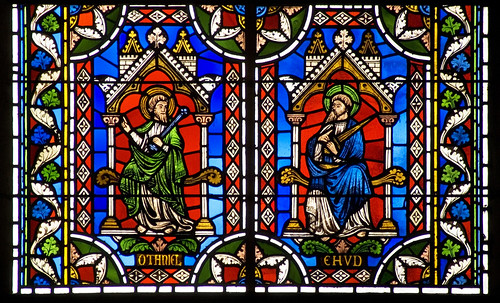
ESV, Judges 3:15-26The people of Israel cried out to the LORD, and the LORD raised up for them a deliverer, Ehud, the son of Gera, the Benjaminite, a left-handed man. The people of Israel sent tribute by him to Eglon the king of Moab. And Ehud made for himself a sword with two edges, a cubit in length, and he bound it on his right thigh under his clothes. And he presented the tribute to Eglon king of Moab. Now Eglon was a very fat man. And when Ehud had finished presenting the tribute, he sent away the people who carried the tribute. But he himself turned back at the idols near Gilgal and said, "I have a secret message for you, O king." And he commanded, "Silence." And all his attendants went out from his presence. And Ehud came to him as he was sitting alone in his cool roof chamber. And Ehud said, "I have a message from God for you." And he arose from his seat. And Ehud reached with his left hand, took the sword from his right thigh, and thrust it into his belly. And the hilt also went in after the blade, and the fat closed over the blade, for he did not pull the sword out of his belly; and the dung came out. Then Ehud went out into the porch and closed the doors of the roof chamber behind him and locked them. When he had gone, the servants came, and when they saw that the doors of the roof chamber were locked, they thought, "Surely he is relieving himself in the closet of the cool chamber." And they waited till they were embarrassed. But when he still did not open the doors of the roof chamber, they took the key and opened them, and there lay their lord dead on the floor. Ehud escaped while they delayed, and he passed beyond the idols and escaped to Seirah.
When Luke comments on Jesus "Beginning with Moses and the Prophets, he interpreted to them in all the Scriptures the things concerning himself." Or when Matthew says that Jesus "Do not think that I have come to abolish the Law or the Prophets; I have not come to abolish them but to fulfill them."
How are Ehud and Jesus related?
Is all Scripture a testimony to Christ, who is Himself the focus of divine revelation or are there parts of Scripture that do not rise to the full level of Christ.? I would like to confirm the latter, but Ehud and the mildew laws and the strange story of Noah getting drunk or of Rehoboam's claim, all tend to push the envelope of being a "testimony to Christ".
Subscribe to:
Posts (Atom)